Built for brand strategists and SEO leads
How we measure what AI actually does with your brand story
As a brand strategist or SEO lead, when your CMO asks how AI dramatizes your category during a quarterly board review, you need a repeatable method—not another mention dashboard. In this situation at an enterprise brand, your team explains what happens inside every answer. Heft runs a structured process through live engines: decode motive structure, score story intensity, and diagnose why visibility breaks—engine by engine—for brand strategists and SEO leads who share one readout.
Heft® goes deeper than “were we mentioned?”—we score story intensity and tell you exactly why you're winning or losing each buyer moment.
Layer 1
AI doesn't answer — it dramatizes
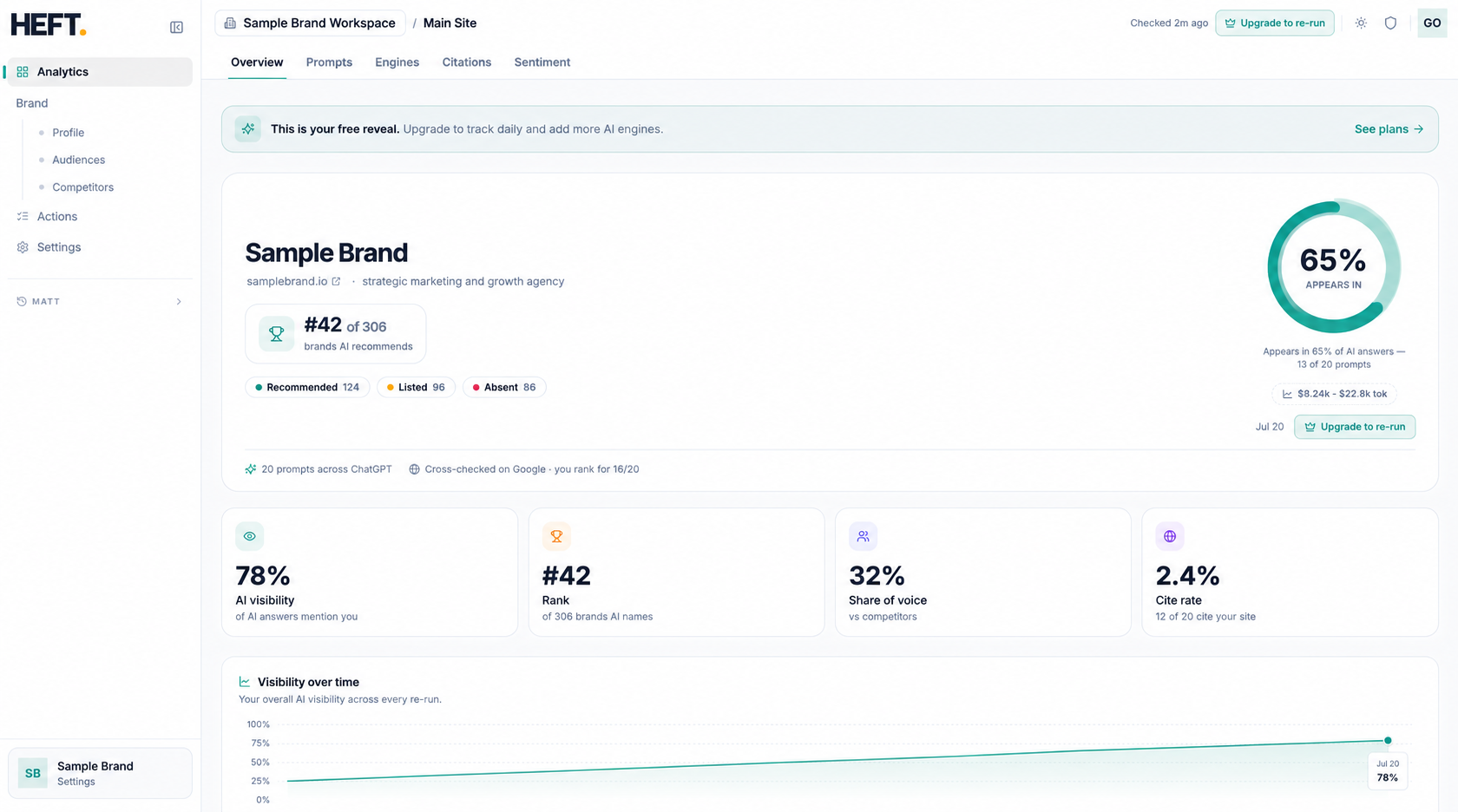
Every AI response constructs a small story: what's happening, who's asking, what action they're taking, what tools solve it, and why it matters. Heft® maps this motive structure and shows where your brand sits inside the explanation — not just whether your name appeared.
This is the measurement layer rank trackers miss. Two brands can both be “mentioned.” Only one is cast as the recommended guide.
Motive structure · five elements
Situation
What world is the shopper in?
Shopper
Who is asking?
Action
What decision are they making?
Means
What product or path solves it?
Purpose
Why should they care?
Dominant driver: which element leads the explanation — and whether your brand is connected to it.
Layer 2
Four signals on every observation
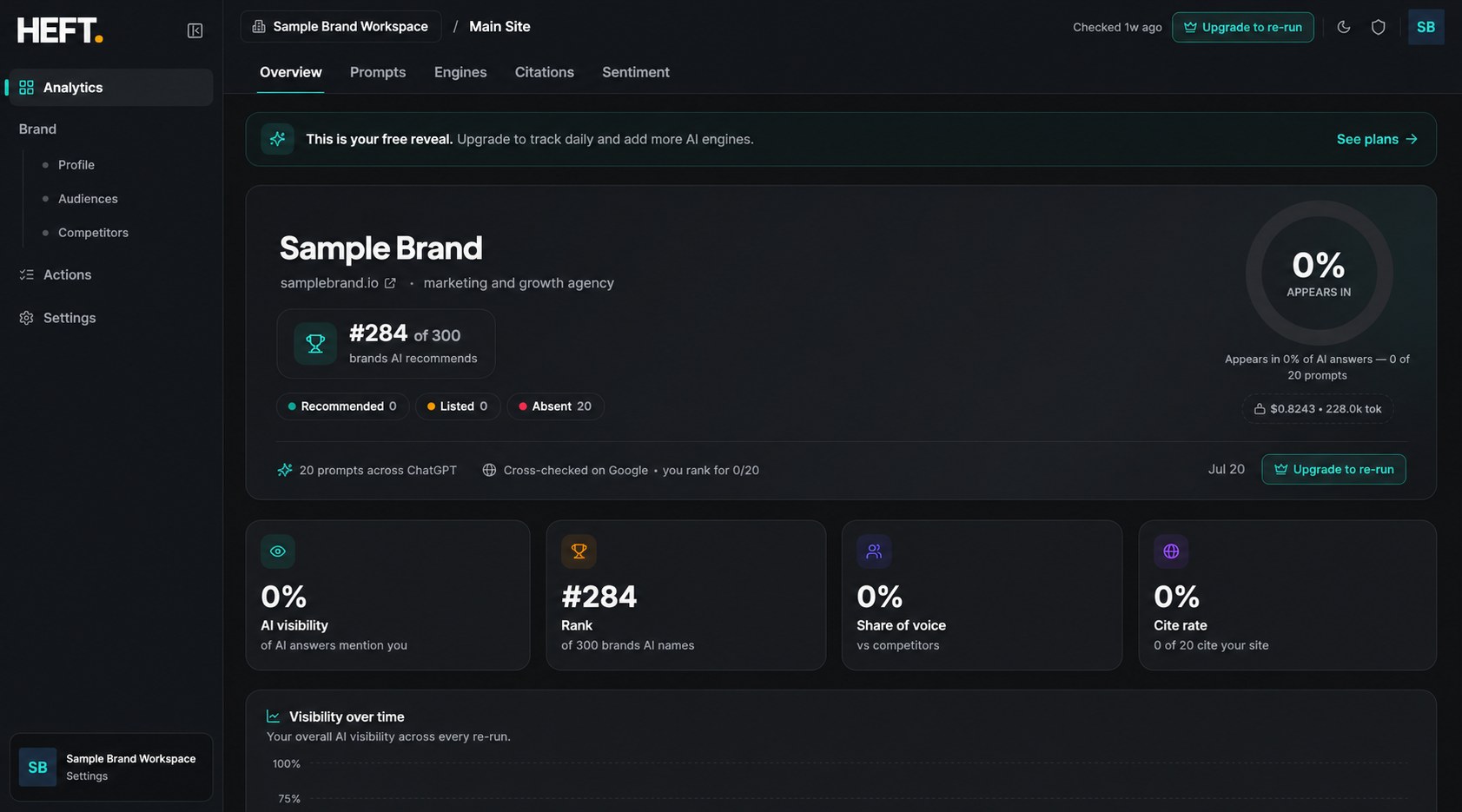
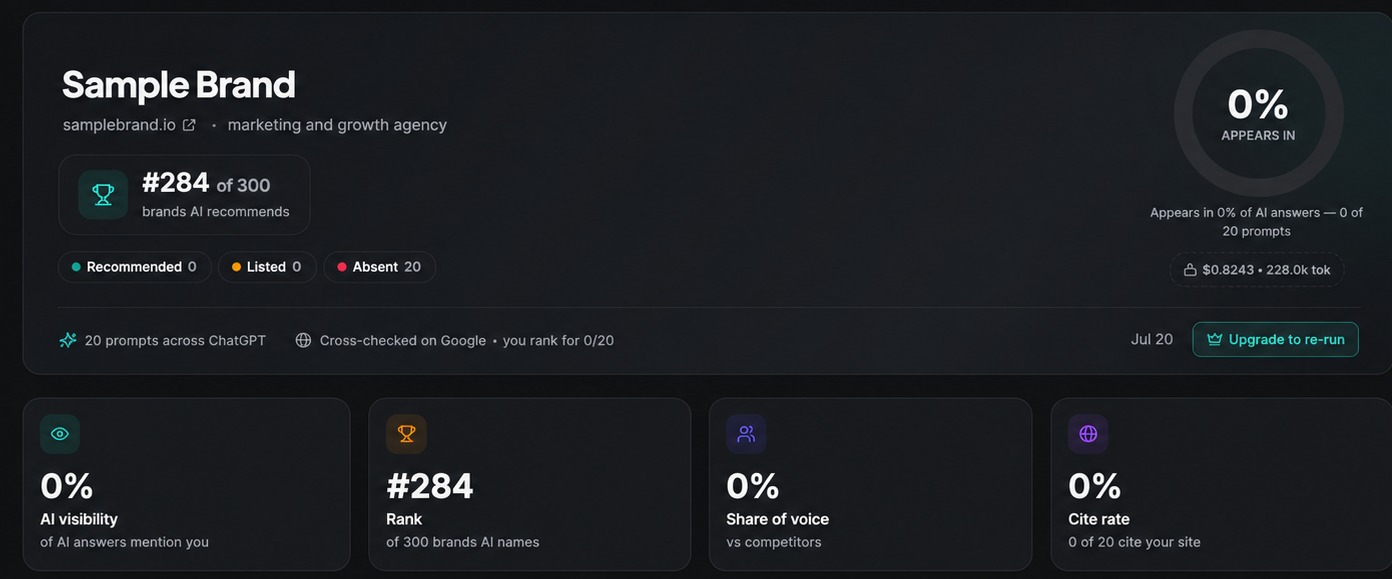
Heft® scores every AI answer against your brand with four independent layers. Mention without recommendation is a diagnosis, not a win.
01
Mention
Did AI say our brand at all?
02
Cite
Did AI point to our URL as evidence?
03
Recommend
Did AI tell the user to choose us?
04
Role
Hero, supporting option, commodity slot, or missing?
The citation trap
High cite rate with low recommend rate means AI uses you as a source — but recommends someone else. Heft® surfaces this pattern so brand teams can fix the story, not just the sitemap.
Layer 3
Three measurement programs, one readout
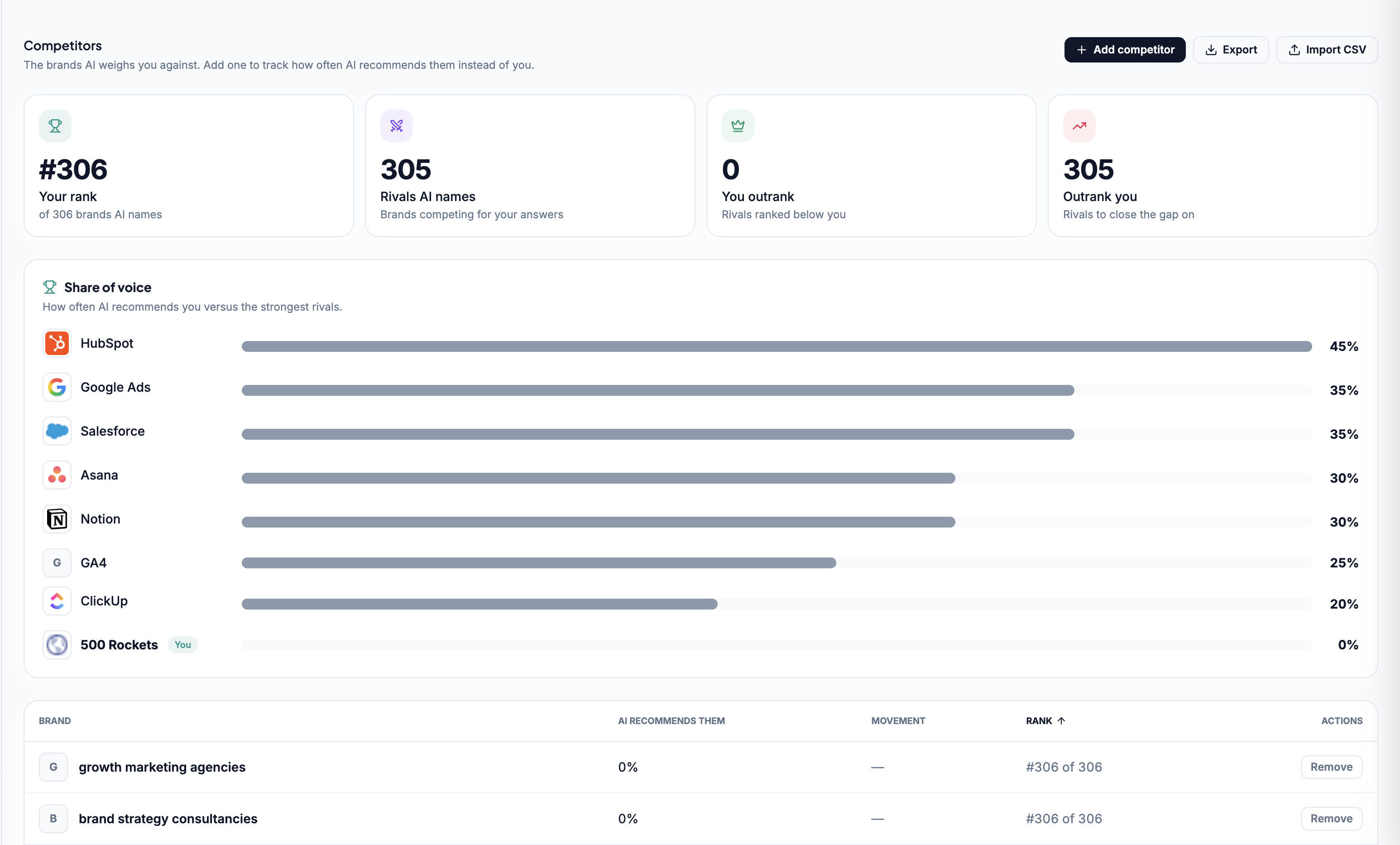
Different questions need different probes. Heft® runs structured programs and rolls them into a single strategist view: position → diagnosis → prescription.
Baseline visibility
If someone asks AI once, do we show up? Seven prompt shapes × multiple engines. Mention, cite, recommend, role — per observation.
Conversation survival
Does our recommendation survive follow-ups and pushback? Multi-turn threads test whether your story holds when the shopper digs deeper.
Gap harvest
What sub-questions does the market still need answered? Surfaces FAQ branches, comparison angles, and content gaps the engine expects but can't find on your site.
Layer 4
Diagnosis: why visibility breaks
Heft® doesn't stop at scores. Every gap is typed — so brand and content teams know exactly what to fix.
Situation story weak
AI doesn't frame the buyer's context the way you chartered it.
Motive misfit
Your brand appears but isn't tied to the dominant driver in the answer.
Proof gap
Competitors have editorial or third-party evidence you lack.
Story intensity low
Messaging is generic — clarity, intensity, or emotion scores fail the vividness bar.
Fan-out unmet
Follow-up questions branch to topics your site doesn't cover.
Accuracy risk
AI describes your brand incorrectly — wrong category, invented claims, competitor confusion.
The flywheel
Measure → sharpen → prove
Heft® closes the loop. Charter a buyer moment, run locked probes, read the dramatization, fix the story, re-measure. Role movement and motive fit delta — not vanity traffic.
By role
Who gets recommended—not just mentioned
Mention is easy to report; recommendation is the verdict. Choose the role and situation you would defend—then measure that story, not a batch of generic queries.
Brand strategists
Your brand, inside what AI says
You've read the dashboards. You've heard "we were mentioned." None of it explains why a buyer's AI thread recommended your competitor while your name sat in a …
28 buyer situations →CMOs
The board asks AI. The answer is a story—not a metric.
The slide deck still says "high intent." The engine still recommends your competitor's plot. The room waits for a story that holds—not another visibility score.
36 buyer situations →Agencies
Your client's drama is already in the model
The client forwards a screenshot: "Why does AI recommend them and cite us?" You have forty-eight hours to turn measurement into a narrative they can sell upsta…
6 buyer situations →Marketing teams
The campaign brief already lives in the model
The launch deck is approved. Someone asks ChatGPT for the category anyway—and the answer doesn't match the narrative you just bought media against.
11 buyer situations →Brand managers
Your stack measures mentions. The buyer hears a plot.
You already have analytics, DAM, and a dozen tabs open. None of them explain why the model recommended your competitor while your brand sat in a footnote.
6 buyer situations →SEO leadership
Keywords were the unit. AI answers in stories.
The keyword deck still looks green. Someone asks ChatGPT for the category anyway—and the recommendation does not match your best-ranking page.
4 buyer situations →SEO practitioners
Your stack still scores keywords. Buyers hear a plot.
You have Search Console, rank trackers, and a tab of prompt tests that never become a system. Leadership wants mention, cite, and recommend—not another export.
4 buyer situations →Enterprise
Procurement asks for proof. The model answers in stories.
Legal wants security. Finance wants credits. The business wants a standard—not another point solution that grades copy instead of dramatization.
25 buyer situations →